Part 1: Community
The Village We Lost, The Village We Can Still Build. Part one of a three-part series.

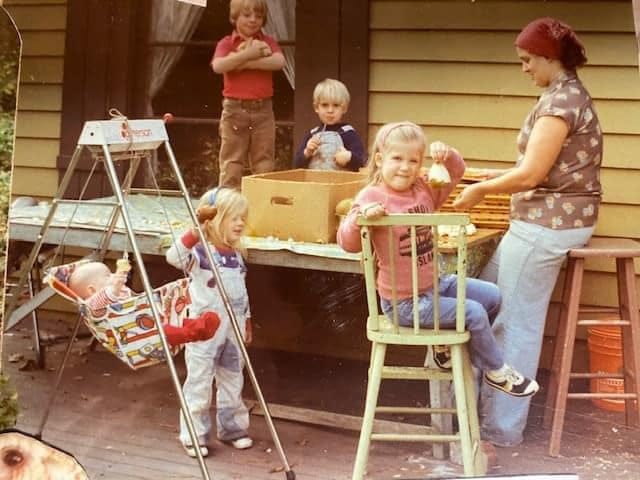
I grew up in a place where community wasn’t something you joined — it was something you were born into. It lived in the spaces between people: the neighbor who knew your dog’s name, the friend’s mom who fed you without asking, the older kids who kept an eye on you at the beach. Belonging wasn’t a question. It was the default.
That kind of community feels almost mythical now.
Kids today are growing up in a world where community is no longer inherited, it’s negotiated. It’s curated. It’s sometimes entirely digital. And while there’s beauty in that, there’s also a cost.
Because the truth is, the digital age has given kids access to more people than ever before… while simultaneously making them feel more alone.
Online, kids can find:
people who share their interests
spaces where they feel understood
friendships that cross geography and circumstance
creative outlets that didn’t exist when we were young
There’s real connection there. Real support. Real belonging.
But there’s also the other side:
the pressure to perform instead of simply be
the comparison that chips away at self-worth
the illusion of connection without the safety of presence
the constant noise that leaves little room for genuine closeness
Digital community can be expansive, but it can also be thin. It can connect kids to the world but disconnect them from the people sitting right beside them.
And that’s why classrooms matter more than ever.
For many kids, school is the only place where community has a physical form. Where someone notices if they’re missing. Where a friend saves them a seat. Where an adult looks them in the eye and says their name with warmth. Where belonging isn’t measured in likes or streaks, but in shared moments, shared space, shared humanity.
When I look at a classroom now, I see kids trying, instinctively, desperately, to rebuild what my childhood gave me without effort. They form micro‑villages: friend groups, table groups, recess alliances, inside jokes. They create rituals. They look for anchors. They reach for each other in ways that feel ancient and deeply human.
Maybe that’s the lesson my small town taught me:
Community isn’t a place. It’s a practice.
And in a digital world, it’s a practice we have to choose again and again.
Kids haven’t forgotten how. They’re still reaching. They’re still building. They’re still looking for their village, even if it looks different now.
And maybe that’s where we come in, to help them build something real, something rooted, something that can hold them in ways a screen never will.
Well said!!