Raised by a Small Town and a Wide‑Open Shore
On barefoot summers, long beach days, and the quiet protection of a community you can’t drive to

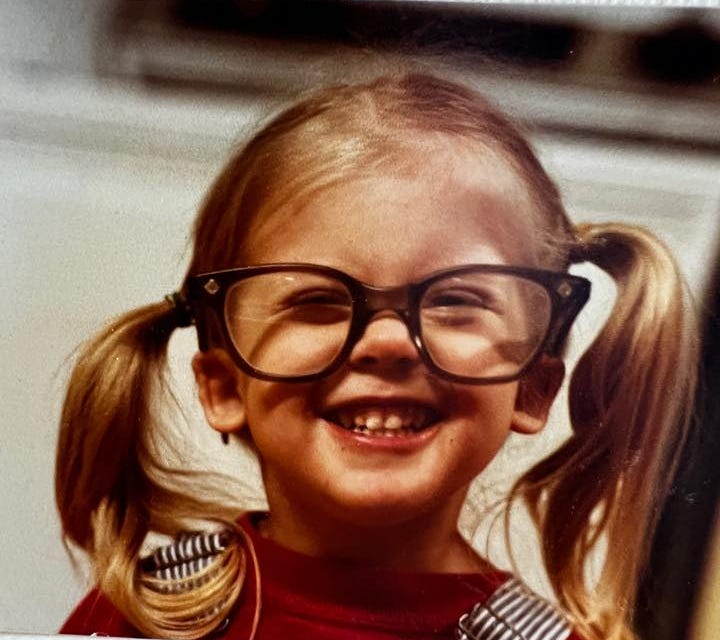
I grew up in a place where the world felt both impossibly small and endlessly safe, the kind of town where locking your doors was optional, not a precaution. Where the biggest threat on a summer night was a raccoon knocking over the trash cans, and even that felt like part of the rhythm of things.
Some of my clearest memories are lit by firelight. Late‑night bonfires that stretched long past the point when the adults thought we were in bed. The sparks would rise into the dark like tiny fireflies. Or we would sit cross‑legged in the sand, our faces warm, smelling like baby oil or some tropical oil. Those days and nights felt like they would last forever, there was a feeling of safety.
Days were long in the way only childhood days can be. We were free‑range kids before anyone called it that barefoot, sunburned, and covered in a mix of dirt, saltwater, and whatever we’d gotten into that day. We’d disappear for hours, reappearing only when hunger or the fading light pulled us home. You hear people say they had to be home before the streetlights came on, on our island there weren’t many streetlights, it was that rural. No one worried. Not really. The island itself felt like a guardian, its isolation a kind of protection. When the only way on or off is a ferry, danger feels like something that happens somewhere else.
There was a comfort in that isolation, a sense that the world couldn’t touch us unless we invited it in. But it also meant we learned early that community wasn’t optional. You needed people. You needed the neighbor who’d help get the cows back in the field, the friend’s mom who’d hand you a sandwich without asking if you were staying for lunch, the older kids who’d keep an eye on the younger ones at the beach. We were raised by a collective, even if we didn’t have the language for it then.
As an adult, I think about that a lot, how natural it felt to belong to something bigger than myself. How connection wasn’t something you scheduled or optimized or “made time for.” It was just… there. Woven into the fabric of daily life. You didn’t have to earn it. You didn’t have to prove yourself worthy of it. You were part of the community simply because you existed inside it.
Some days I miss that simplicity with an ache I can’t quite name.
Because now, community feels like something we have to build with intention. We live in a world where you can go days without seeing your neighbors, where safety is something we negotiate instead of assume, where belonging is something we chase instead of something we inherit.
But maybe that’s the point. Maybe the lesson from that small, ferry‑bound town isn’t that community used to be easier, but that it used to be expected. And expectations shape behavior.
I’m learning that we still need each other just as much as we did back then. Maybe more. We still need the people who show up without being asked, the ones who notice when we’ve gone quiet, the ones who remind us that we don’t have to carry everything alone.
Maybe community isn’t something we find. Maybe it’s something we choose to build, again and again, in whatever place we land.
And maybe the barefoot, dirt‑streaked kid I used to be is still teaching me how.